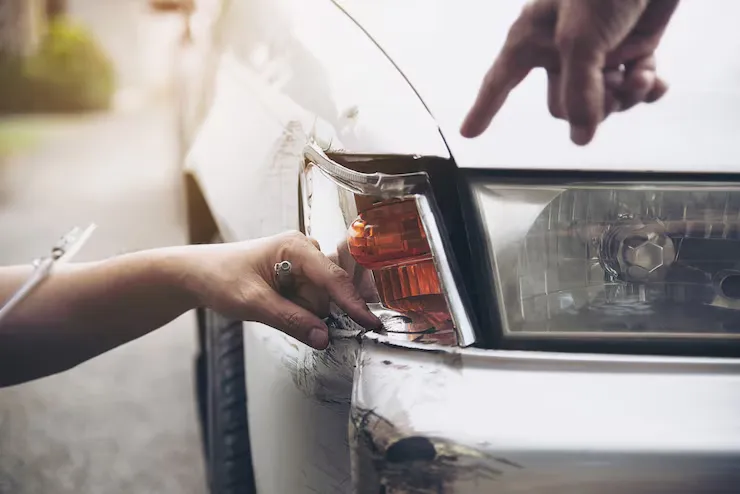
A car accident can feel like the kind of thing you handle in five minutes and move on from. No one’s bleeding, both cars are still drivable, and the damage appears to be cosmetic.
But “minor” is a description of the moment, not a guarantee about what happens next. Injuries like whiplash or soft-tissue damage can take hours or days to surface, and small disputes over fault or damage can get complicated fast without the right documentation.
Here’s exactly what to do, in order: how to handle the scene safely, what to document, what happens after you leave, and the mistakes that turn a simple accident into a drawn-out headache.
What Is a Minor Car Accident?
A minor accident typically involves a low-speed impact, limited visible vehicle damage, and no injuries that are obvious at the scene. Think a rear-end tap in traffic or a parking lot fender-bender.
“Minor,” though, describes what you can see in the first few minutes, not what the accident actually cost you. It doesn’t mean there are no injuries, no liability disputes, and no insurance complications waiting a few steps down the road.
Soft-tissue injuries, headaches, and stiffness are common after even low-speed impacts, and they often don’t appear until later that day or the next morning. Treat every accident, minor or not, as worth documenting properly.
How to Handle the Accident Scene Safely
The first few minutes matter most. Before worrying about the dent in your bumper, work through safety and injuries first.
Check for Injuries
Check yourself, your passengers, and everyone else involved before you look at vehicle damage. Call 911 immediately if anyone has pain, dizziness, bleeding, confusion, or any symptom that concerns you, even if it seems mild.
Move to Safety
If your vehicle is drivable and it’s safe and legal to do so, move it out of active traffic and onto the shoulder or a nearby lot. Turn on your hazard lights, and avoid standing in traffic lanes while you wait.
Call the Police
Even when the damage looks minor, a police report creates an official record that can matter later if fault is disputed or an insurer pushes back. Under California Vehicle Code section 20008, drivers must notify law enforcement within 24 hours when a collision results in injury or death, so don’t wait if anyone was hurt.
Separately, California requires drivers to report accidents directly to the DMV in certain cases, regardless of whether police responded.
How to Document the Accident and Exchange Information
Good documentation protects you if a dispute over damage, fault, or injuries arises weeks later. Stay factual; this isn’t the moment to argue about who caused what.
Driver Information
Exchange names, phone numbers, driver’s license numbers, license plate numbers, insurance companies and policy numbers, and basic vehicle information (make, model, color) with every driver involved. If there are witnesses, get their names and contact information too; they’re often impossible to track down later.
Photos and Notes
Photograph vehicle damage from multiple angles, the position of the vehicles, road and traffic conditions, any relevant signs or signals, skid marks, debris, and any visible injuries. While details are fresh, write down the time, exact location, weather conditions, direction of travel, and a simple account of what happened.
A small bumper tap with no photos and no witness information can turn into a drawn-out dispute weeks later if the other driver’s story changes or an insurer questions what happened. A few minutes of documentation at the scene can avoid that entirely.
What to Do After Leaving the Scene
Handling the scene well is only the first part. What you do in the following hours and days matters just as much.
Medical Evaluation
Get checked out if you notice any pain, stiffness, headache, dizziness, or other symptoms, even if they seem minor or start a day or two later. Keep copies of all medical records and follow through on any treatment your provider recommends; gaps in treatment are among the first things insurers look for when questioning an injury claim.
Insurance Notification
Notify your insurance company promptly, even if the damage looks minor. Most policies require notice within a “reasonable” or “prompt” timeframe rather than a fixed number of days, so don’t wait to see how things unfold. Stick to the facts and avoid guessing about fault or injury severity; you don’t have that information yet, and speculation can complicate things later.
Separately, California law requires reporting certain accidents directly to the DMV. Under California Vehicle Code Section 16000, you (or your insurance agent) must file a Report of Traffic Accident Occurring in California (Form SR-1) with the DMV within 10 days if the accident involved any injury, a death, or property damage over $1,000, regardless of fault.
This applies in addition to any police report or insurance claim, and the $1,000 threshold is lower than most people expect, so plenty of “minor” accidents still qualify.
Repair Records
Get a professional damage estimate rather than assuming repairs will be cheap; cosmetic damage can hide more expensive mechanical or structural issues. Keep every receipt, repair estimate, towing bill, and rental car cost connected to the accident; you’ll want all of it if you end up filing a claim or a lawsuit later.
If a claim or lawsuit becomes necessary, keep in mind that California Code of Civil Procedure section 335.1 sets a two-year statute of limitations for most personal injury claims, running from the date of the accident. Two years sounds like a long time, but evidence and witness memory fade well before then, so it’s rarely to your advantage to wait.
Mistakes to Avoid After a Minor Accident
A few common errors turn straightforward accidents into complicated ones:
- Leaving too quickly without exchanging information or documenting the scene
- Admitting fault at the scene, even casually; an offhand “I didn’t see you” can be used against you later.
- Skipping photos because the damage looks too minor to bother
- Ignoring symptoms that seem mild at first
- Settling privately with the other driver, cash-in-hand, without any documentation
Apologizing or speculating can be misread as an admission of fault, even if that’s not what you meant. Stick to facts: what you saw, what you did, and what happened—nothing more.
It’s also worth knowing why insurers and attorneys care so much about those first few minutes: early statements are recorded, and missing documentation is one of the most common reasons a straightforward claim becomes contested. The steps above exist specifically to prevent that.
Involved in an Accident? Kirtland & Packard Is Here to Help
Kirtland & Packard have represented accident victims throughout Southern California since the 1930s. Whether your accident happened in Redondo Beach or you’re looking for car accident lawyers in Torrance, our team handles every case on a contingency basis; you pay nothing unless we win. We’re available 24/7, and se habla español.
If you’re not sure what to do after a car accident, even a minor one, a quick call can help you protect your health, your claim, and your rights before small mistakes become bigger problems.
This article is for general informational purposes only and is not a substitute for legal advice. Every accident is different; contact an attorney to discuss the specific facts of your situation.
Frequently Asked Questions
Should I file an insurance claim for a minor accident?
It depends on the damage, fault, and your policy’s terms. Even minor accidents are worth reporting to your insurer promptly, since injuries and additional damage can surface after the fact.
What if there is no visible damage after a minor accident?
Still exchange information and take photos, and watch for hidden mechanical damage or symptoms that appear later. “No visible damage” isn’t the same as “no damage.”
Do I need a lawyer after a minor car accident?
Consider talking to a car accident attorney in Redondo Beach if injuries develop, fault becomes disputed, an insurer denies your claim, or costs turn out to be higher than expected. A free consultation costs nothing and can clarify your options either way.